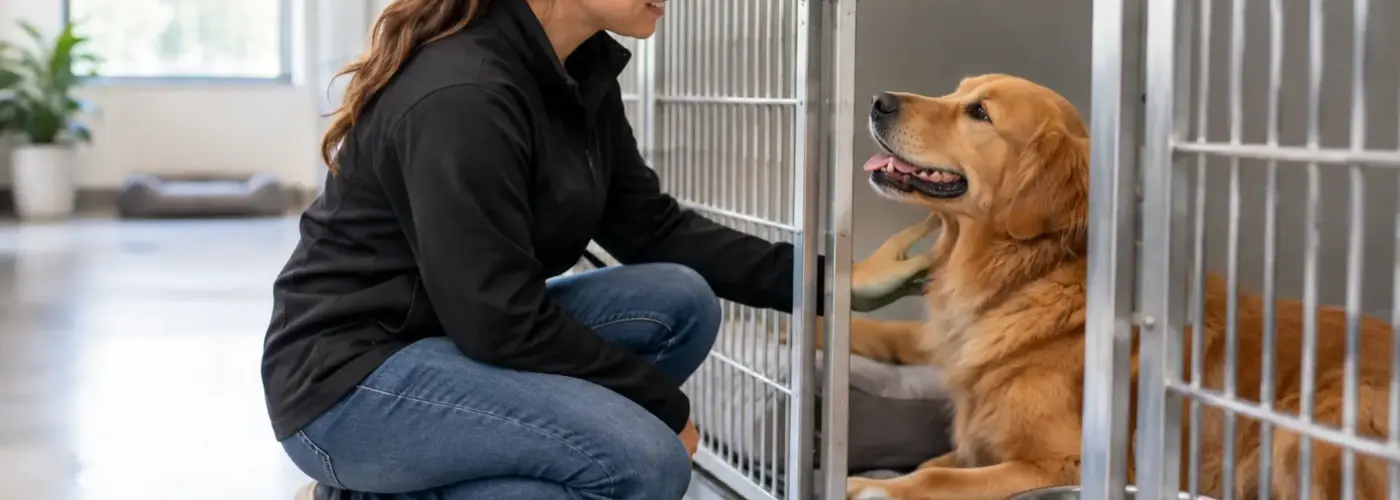
Settling Dogs Into Kennels With Confidence
The hardest part of leaving a dog for a holiday is often the front gate. They may be thrilled by a new smell, eager to investigate, or briefly unsure why their usual routine has changed. Settling dogs into kennels starts well before drop-off day. A little preparation, honest communication and the right boarding environment can turn an unfamiliar stay into a safe, enjoyable break.
Dogs are wonderfully adaptable, but they do not all adapt in the same way. A sociable young dog may settle quickly after a walk and a meal, while an older dog or a naturally cautious one may need more time, quieter handling and a familiar routine. A good kennel team will treat those differences as useful information, not as a problem.
Choose a kennel that supports a proper routine
The setting matters. Dogs generally settle more comfortably when their days have a clear pattern: time to rest, regular meals, exercise, toilet breaks and calm human contact. Ask how often dogs are walked, whether they have private outdoor space, how accommodation is heated and supervised, and what happens if a dog seems unsettled.
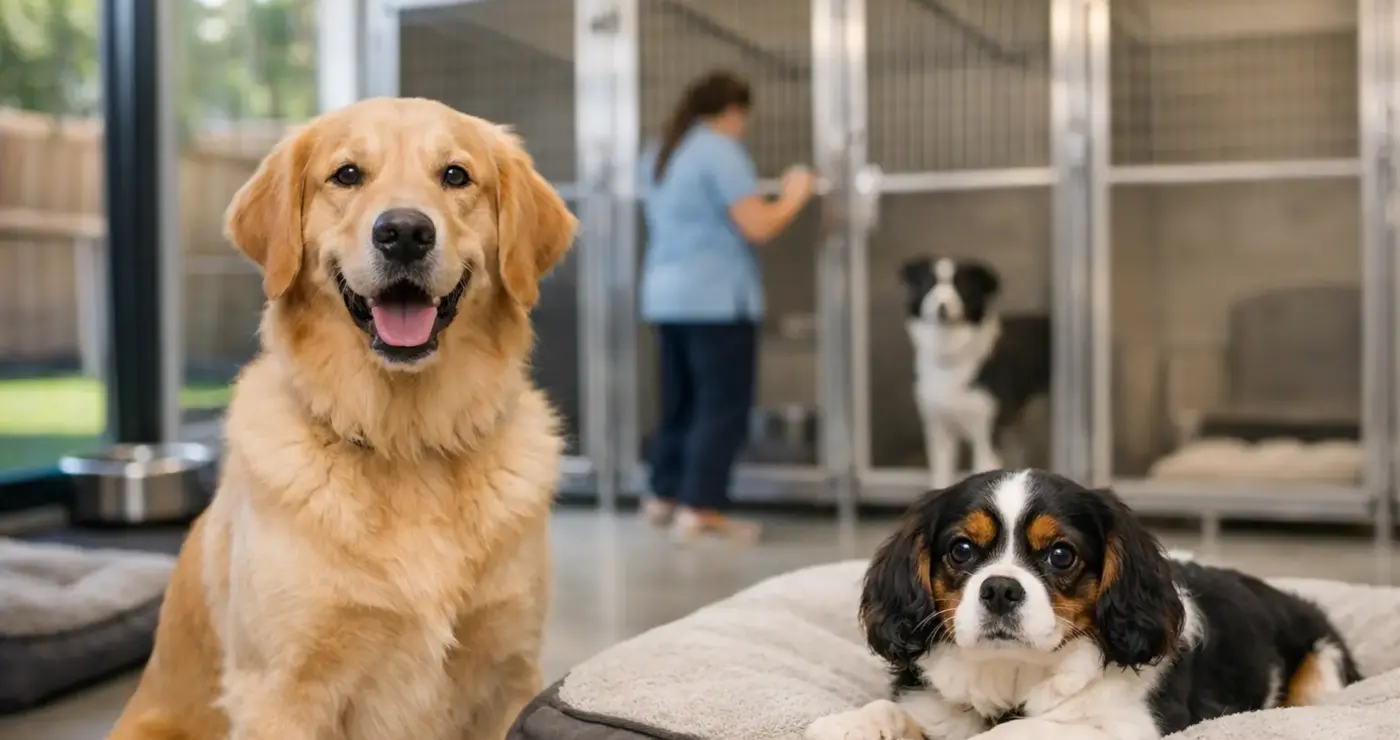
A kennel should feel organised rather than rushed. Individual accommodation helps many dogs relax away from the excitement of other boarders, while secure outdoor runs give them fresh air and the chance to watch the world at a comfortable distance. Exercise is equally important. A dog that has had a satisfying walk is usually better placed to rest afterwards.
At Windmill Farm, dogs have heated accommodation, individual covered outdoor runs, indoor toys and twice-daily paddock walks across the farm setting. These practical details are not simply comforts. They create a predictable day with opportunities to move, sniff, rest and engage with the people caring for them.
Start settling dogs into kennels before the stay
For a first-time boarder, a short trial stay can be a very sensible option. It gives your dog a chance to learn that you return after leaving them, and it allows the kennel team to get to know their character before a longer booking. This can be particularly helpful for puppies, rescue dogs, older pets and dogs that have always stayed with family members.
A trial does not guarantee that every dog will be completely relaxed straight away. Some need a few visits before the routine feels familiar. Yet even a brief stay can make the next arrival less of a surprise, especially when the same staff, smells and daily pattern are waiting for them.
Keep life at home steady in the days leading up to boarding. Avoid making dramatic changes to food, feeding times or exercise if you can help it. If your dog normally eats breakfast and walks in the morning, retain that pattern before you travel. Familiar routines are reassuring because they make the day feel recognisable, even when the location is new.
Practise short separations calmly
If your dog is rarely left alone, begin with short, ordinary absences at home. Go out without a lengthy goodbye, then return without making a great fuss. The aim is not to ignore your dog, but to show them that departures and returns are normal parts of the day.
This is especially useful for dogs that follow their owners from room to room or become anxious when suitcases appear. Do not try to cram weeks of separation training into the final few days before a trip. Gentle, consistent practice over time is far more useful than a sudden change.
Give the boarding team the full picture
The best handovers are straightforward and specific. Your kennel team needs to know what makes your dog comfortable, what they enjoy and anything that may affect their care. It is better to mention a small habit than assume it is unimportant.
Tell the team about feeding quantities, medication, allergies, mobility concerns and any veterinary history that could be relevant. Explain whether your dog is nervous around loud noises, prefers a quieter approach, guards food, dislikes being handled around a particular area, or has a favourite game. Equally, mention what reliably helps them settle: a slow stroke, a ball in the run, a particular bedtime routine or time to sniff before coming indoors.
Bring food as agreed with the kennel, particularly if a sudden change of diet could upset your dog's stomach. Clearly labelled medication and written instructions reduce the chance of confusion at a busy handover. Make sure emergency contact details are current, including someone who can make decisions if you are difficult to reach.
Vaccination and health requirements should be checked well ahead of your booking. Kennels have clear policies to protect every dog in their care, and leaving this until the last minute can create unnecessary stress for everyone.
Pack familiar items thoughtfully
A familiar-smelling blanket, bed or suitable toy can help some dogs settle. The key word is suitable. Choose an item that is safe, washable and unlikely to be destroyed or swallowed if your dog is bored or excited. Not every dog needs belongings from home, and some become more frustrated by an item they only associate with you. The kennel staff can advise on what is appropriate for your individual dog.
Avoid sending irreplaceable toys or treasured bedding. Kennel life includes washing, outdoor time and the natural wear that comes with an active dog. Comfort should never come at the expense of safety or peace of mind.
Make drop-off calm and clear
Dogs notice our mood. It is perfectly natural to feel emotional about leaving them, but a long, anxious farewell can suggest that there is something to worry about. Aim for a warm, matter-of-fact handover: let your dog greet the staff, pass on any final information, say goodbye once and leave calmly.
Try not to repeatedly return for one more cuddle after the goodbye. For many dogs, this prolongs the uncertain moment. Experienced carers know how to redirect a new arrival towards a walk, a sniff around their space or a quiet chance to settle.
Arriving with enough time also helps. A rushed handover makes it harder to share important details and can transfer tension to your dog. If your journey to the kennel may involve London traffic, allow a little extra time rather than arriving flustered.
What if your dog seems unsettled at first?
A dog may eat less than usual on the first evening, sleep lightly or take a little while to show their usual playful side. A change of surroundings can do that. What matters is that trained staff are watching, adjusting their approach and keeping you informed where appropriate.
There is a difference between a dog taking time to adjust and a dog showing ongoing distress. This is why professional supervision, clear welfare procedures and veterinary support matter. Ask the kennel how they monitor dogs, when they would contact you and what veterinary arrangements are in place. Reassurance is most meaningful when it is backed by a plan.
Help your dog come home gently
Collection can be exciting, and your dog may be delighted to see you. Keep the journey home calm if possible, offer water and let them rest. Some dogs sleep deeply after a busy stay with plenty of fresh air and walks; others are immediately ready to resume home life. Both can be perfectly normal.
Try not to overload the first evening with visitors, long outings or enthusiastic children wanting hours of play. Give your dog time to readjust, then return to their ordinary feeding and walking routine. If anything seems unusual or you have a concern, speak to the boarding team rather than guessing.
The goal is not for your dog to forget you while you are away. It is for them to learn that a kennel stay can be safe, kind and full of familiar rhythms - and that you always come back.
Posted: 13th October 2026
Why Choose Windmill Farm?
Here at Windmill Farm we understand how much your pets mean to you and so we want you to be confident that choosing us to house your pets is the best decision. Your stay at Windmill Farm will benefit from...
- Very friendly, family run business
- Established for over 60 years
- Surrounded by 15 acres of land
- Nestled in the Surrey countryside
- Dog pick up and collection service
- 24 hour on-call veterinary services
- Covered outside runs and plenty of toys
- All kennels and catteries are fully heated