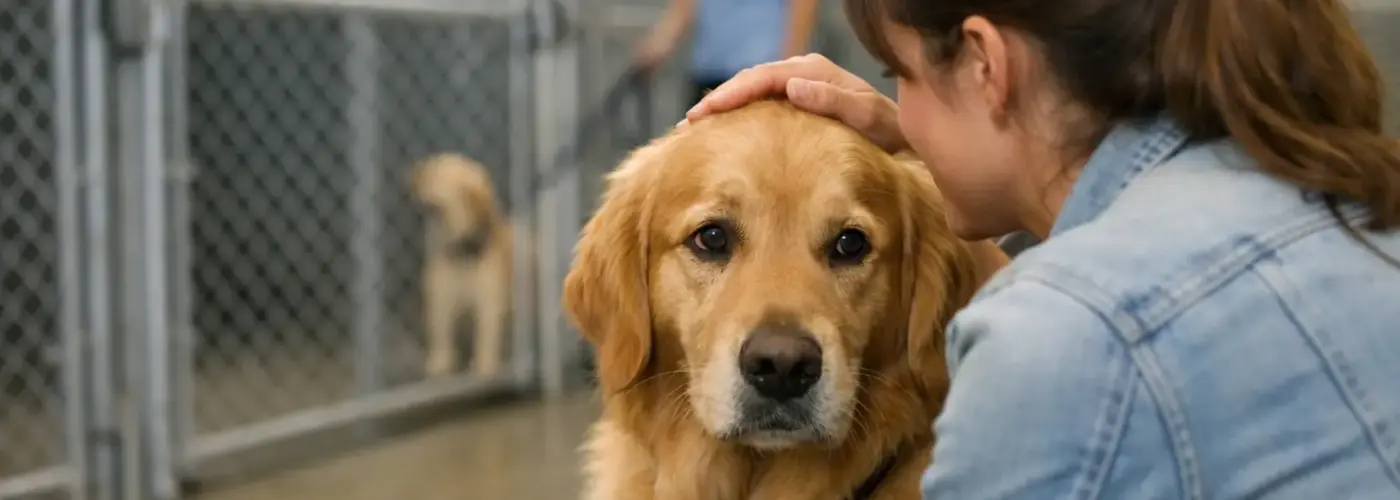
How to Settle Kennel Anxiety Before Boarding
A dog who follows you from room to room may find the thought of boarding harder than a confident, sociable pet - and so may their owner. Learning how to settle kennel anxiety starts well before the day you leave. A few calm, practical preparations can make the change of routine feel predictable, safe and manageable for your dog.
Kennel anxiety does not mean your dog is being difficult, nor does it mean they will never enjoy a stay away from home. Dogs are creatures of habit. New sounds, smells, people and routines can feel like a great deal to take in at first. The aim is not to make every new experience disappear, but to help your dog build trust in the people and routine around them.
Understand what your dog is telling you
Some nerves are to be expected, particularly with young dogs, rescue dogs or pets that have never stayed in boarding before. They may be quieter than usual, clingy in the days before a stay, reluctant to get into the car, or more watchful in unfamiliar surroundings. Given patient handling and a steady routine, many dogs settle surprisingly quickly.
More significant anxiety deserves extra attention. Repeated attempts to escape, destructive behaviour, persistent refusal to eat, diarrhoea caused by stress, or fear that does not ease after time and reassurance should be discussed with your vet and the boarding team before a stay is arranged. A professional kennel can plan care around a nervous dog, but it needs an honest picture of their usual behaviour, triggers and any medical needs.
Try not to label your dog as simply ‘fine with other dogs’ or ‘a bit nervous’. Explain what that looks like in practice. Do they relax after a walk? Are they worried by loud noises? Do they guard food or toys? Do they need time before accepting a new person? These details help staff give the right sort of attention from the start.
How to settle kennel anxiety before the stay
The most helpful preparation is gradual. If possible, arrange a visit before booking a longer stay. Seeing the setting, meeting the team and experiencing a brief visit can make the boarding environment less unfamiliar when it matters. It also gives you the chance to ask practical questions about exercise, sleeping arrangements, meals and how staff monitor new arrivals.
For a dog who has never boarded, a short trial stay can be worthwhile before a longer holiday. It is not always necessary, and some relaxed dogs settle perfectly well on their first visit, but it can be a kind option for a sensitive pet. A one-night stay lets them learn that you leave, they are cared for, and you always return.
Keep home life calm in the week beforehand. Maintain normal mealtimes, walks and rest periods rather than trying to tire your dog out with unusually long outings or filling every day with excitement. Dogs often pick up on rushed packing, changed voices and anxious goodbyes. The more ordinary the lead-up feels, the better.
It can also help to practise small separations at home. Leave your dog with a trusted family member for an hour or two, or let them settle with a safe chew in another room while you get on with a task. Build the time gradually and return without making a big fuss. This is not about ignoring your dog. It is about teaching them that short periods apart are safe and routine.
Keep familiar comforts familiar
Ask your chosen boarding kennel what items they can safely accept. In some cases, a familiar-smelling blanket or approved comfort item can be reassuring. In others, bedding and toys may be provided to meet hygiene and safety standards. Follow the kennel’s guidance rather than sending anything that could be chewed, swallowed or cause a disagreement around food or possessions.
Food is another important consideration. Sudden dietary changes can upset even a confident dog, particularly when they are adjusting to a new place. Provide clear feeding instructions and let staff know about allergies, sensitive digestion, treats and habits such as needing food softened. If your dog takes medication, give written instructions and ensure the boarding provider is fully aware of the prescription and timing.
Never start calming medication, supplements or sedatives without veterinary advice. What appears to make a dog quiet may not make them feel secure, and some medicines are unsuitable for travel or boarding. Your vet can advise if your dog’s anxiety is severe or linked to an underlying health issue.
Choose a setting built around routine
A good boarding stay is not just about having a clean place to sleep. Dogs settle more readily when days have a clear rhythm: meals at reliable times, rest between activity, kind staff, regular checks and appropriate exercise. For many dogs, knowing what happens next is deeply reassuring.
When comparing kennels, look beyond the photographs. Ask how often dogs are exercised, whether they have their own secure area, what happens if they are slow to settle, and who is available if there is a health concern. Observe whether your questions are welcomed and answered clearly. You should feel comfortable sharing your dog’s quirks, not worried that you are being overprotective.
Space matters too, though every dog is different. A busy dog may benefit from fresh air and purposeful walks, while an older or more reserved dog may need a quieter pace and plenty of time to rest. Individual covered runs offer dogs room to move and observe their surroundings without being constantly placed in close contact with other pets.
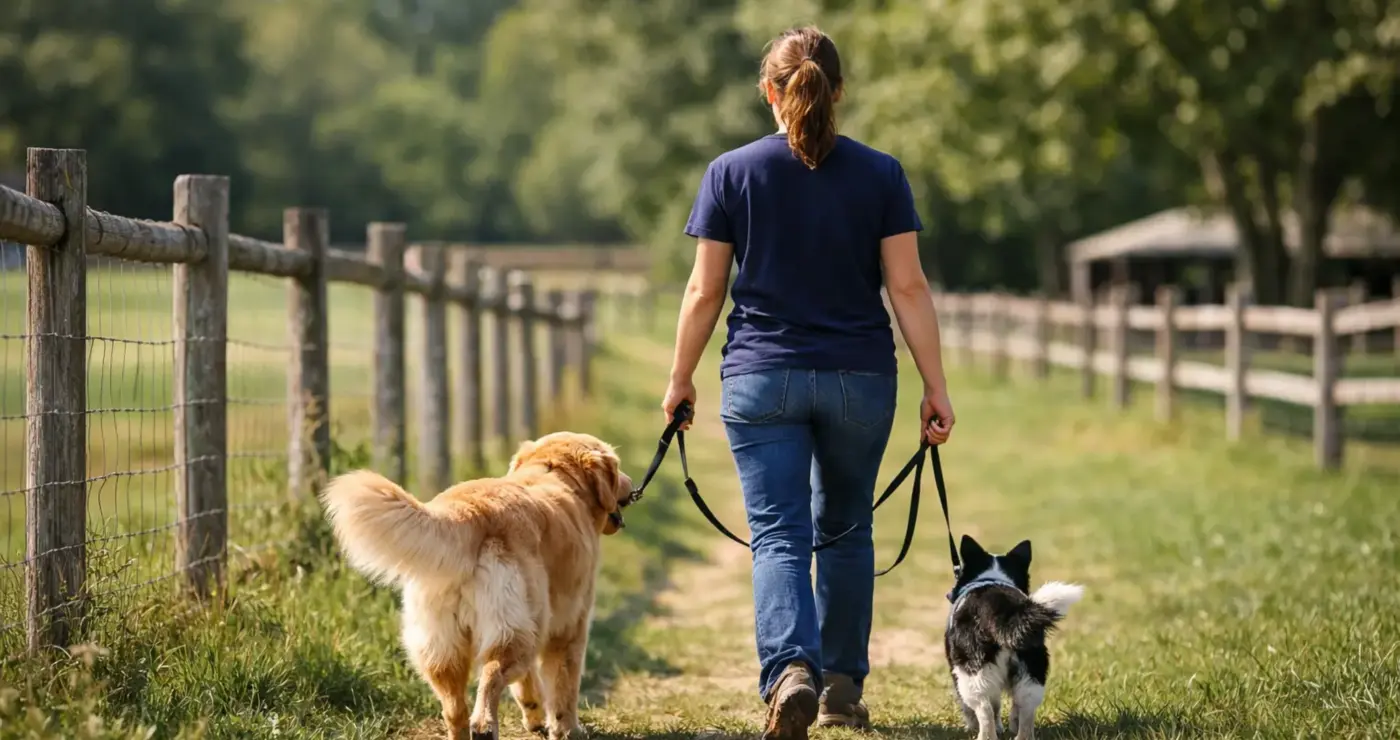
At Windmill Farm, dogs have heated accommodation, their own covered outdoor runs, indoor enrichment and twice-daily paddock walks. This sort of structured care gives dogs activity, comfort and calm periods throughout the day, rather than leaving them to cope with an unfamiliar environment on their own. Veterinary standby cover also offers valuable reassurance should a concern arise while you are away.
Make drop-off calm and clear
The handover can set the tone for the first few hours. Allow enough time so that you are not rushing, but keep your goodbye simple and matter-of-fact. Dogs are very good at noticing when we are upset. A long, emotional farewell can accidentally tell a dog that there is something to worry about.
Bring the information the kennel has requested, including vaccination records where required, feeding details, medication and emergency contact numbers. Tell staff if anything has changed recently: a limp, a reduced appetite, a new fear, a change in toileting or a stressful event at home. Small details can be useful, especially during a first stay.
Once your dog has been handed over, let the team take the lead. It is natural to want one more cuddle or to look back repeatedly, but a confident exit is usually kinder. Staff can then introduce your dog to their space, allow them time to sniff and settle, and begin the routine without prolonging the moment of separation.
Help your dog settle after boarding too
Your dog may be delighted to see you and then sleep deeply for a day or two. Boarding involves new smells, activity, walks and social awareness, even for a dog who has enjoyed every minute. Give them a quiet homecoming, fresh water, their usual meals and the chance to rest.
Avoid assuming that a tired dog had a bad experience. Equally, do not dismiss lasting changes in appetite, toileting or behaviour. If something worries you, speak to the boarding team and your vet. A thoughtful kennel will want to know how your dog has been after their stay and can use that feedback to make the next visit even more comfortable.
Every successful stay teaches a dog something useful: that unfamiliar surroundings can still include warmth, exercise, meals, gentle care and a safe place to rest. With steady preparation and the right boarding environment, even a nervous dog can come to see time at the kennels as a familiar part of life, not something to fear.
Posted: 26th August 2026
Why Choose Windmill Farm?
Here at Windmill Farm we understand how much your pets mean to you and so we want you to be confident that choosing us to house your pets is the best decision. Your stay at Windmill Farm will benefit from...
- Very friendly, family run business
- Established for over 60 years
- Surrounded by 15 acres of land
- Nestled in the Surrey countryside
- Dog pick up and collection service
- 24 hour on-call veterinary services
- Covered outside runs and plenty of toys
- All kennels and catteries are fully heated