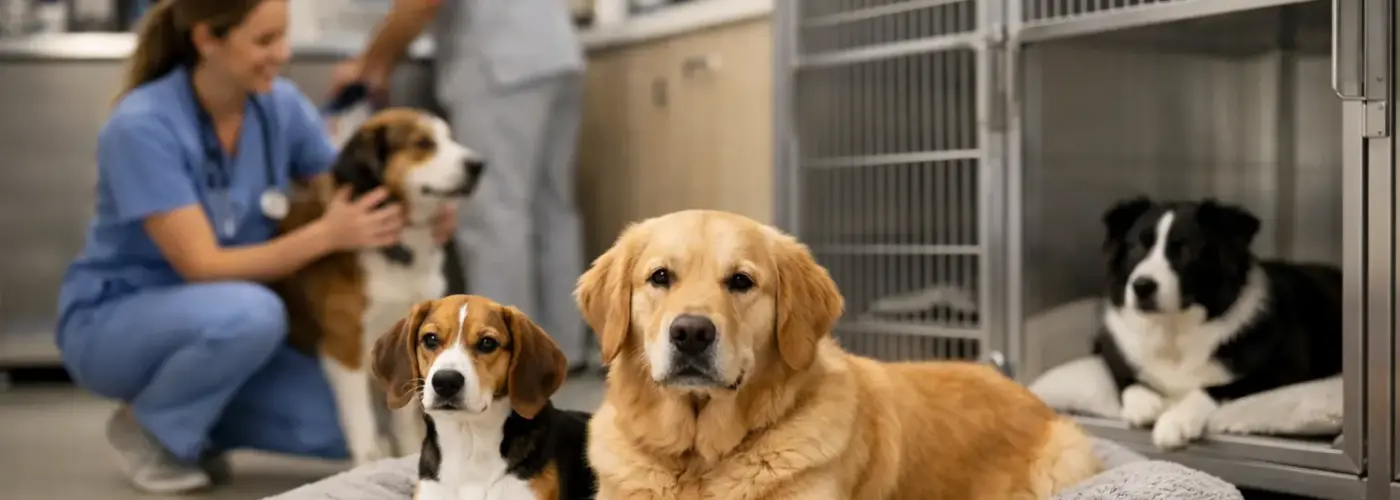
24 Hour Veterinary Support Dog Boarding Care

Leaving your dog behind for a holiday, work trip or family commitment can feel rather like handing over a piece of your household. For many owners, 24 hour veterinary support dog boarding is one of the details that turns a kennel booking from a worry into a sensible, well-planned arrangement. It means there is a clear route to professional veterinary help should a concern arise outside ordinary opening hours, alongside the attentive day-to-day care that helps dogs settle.
That reassurance matters, but it should sit within a bigger picture. Good boarding is not simply about having a number to call in an emergency. It is about staff who notice changes, safe and comfortable accommodation, regular exercise, familiar routines, and sensible communication with owners. When these things work together, your dog has the best chance of enjoying a settled, stimulating stay while you are away.
What 24 Hour Veterinary Support Dog Boarding Means
The phrase can mean different things at different establishments, so it is worth asking clear questions before you book. In practical terms, veterinary standby support means that a boarding provider has arrangements in place to seek veterinary advice or treatment if a dog becomes unwell or is injured, including when this happens overnight or outside normal surgery hours.
It does not necessarily mean that a vet is permanently on the premises. Most boarding kennels rely on a trusted local veterinary practice and its out-of-hours service, while trained, caring staff monitor the dogs in their accommodation. What matters is that the procedure is understood, realistic and acted on promptly.
A responsible boarding provider should be able to explain what they do if your dog needs attention. They should ask for your usual vet's details, any medical history, current medication and an emergency contact. They should also make clear how they will contact you if veterinary advice or treatment is required. These are not awkward questions. They are signs that you are choosing care thoughtfully.
Why a Clear Veterinary Plan Gives Owners Peace of Mind
Dogs can pick up a minor upset just as easily in kennels as they can at home. A change in routine may affect appetite or digestion, while an energetic dog might develop a sore paw during play or exercise. Older dogs and those with ongoing conditions may need especially careful observation.
The benefit of veterinary standby support is not that it removes every possible risk. No honest boarding business could promise that. Its value is that there is a calm, organised response when something does not seem right. Staff can observe the dog, follow the agreed instructions, contact a vet where necessary and keep the owner informed.
For first-time boarders, this can be particularly comforting. You may be wondering whether your dog will eat properly, sleep well or cope with being away from home. A well-run kennel will take those concerns seriously and will not treat every dog as though they have identical needs. Some settle immediately; others need a little more time, reassurance and gentle encouragement.
Veterinary Support Works Best With Attentive Daily Care
A veterinary plan is a safeguard, not a substitute for good everyday standards. The small details of a dog's stay often make the greatest difference to their comfort and wellbeing.
Comfortable accommodation supports rest
Dogs need a dry, secure place to switch off after exercise and activity. Heated accommodation is particularly welcome during colder spells, helping dogs rest comfortably rather than becoming unsettled by the temperature. Clean bedding, sensible separation between dogs and well-maintained suites also help create a calmer environment.
At Windmill Farm, dogs have individual covered outdoor runs alongside their accommodation. This gives them their own space and fresh air without relying on constant group interaction, which does not suit every temperament. For some dogs, particularly those who are nervous or easily overstimulated, that balance of space and supervision can make settling far easier.
Exercise is part of the routine, not an optional extra
A dog who has had a proper opportunity to walk, sniff and explore is usually better able to relax afterwards. Regular exercise also gives staff a useful chance to see how a dog is moving, behaving and responding from day to day.
Twice-daily paddock walks offer a change of scene and a welcome outlet for energy. The right amount of exercise will depend on your dog's age, breed, fitness and character. A young, lively dog may enjoy a more energetic outing, while an older companion may be happier with a gentler pace and extra time to investigate the grass at their own speed.
Enrichment helps dogs feel at home
Boarding does not need to be a long stretch of waiting for collection day. Indoor enrichment toys and appropriate interaction give dogs something positive to focus on between walks, particularly when the weather is wet or chilly.
Enrichment should be matched to the individual. A food-motivated dog may enjoy a puzzle-based activity, while another simply prefers a quiet toy and friendly company. The aim is not to keep a dog busy every minute. It is to offer interest, comfort and a routine that feels safe.
Questions to Ask Before Booking
When you visit a boarding kennel or speak to the team, look beyond attractive photos and broad promises. Ask how dogs are monitored, what happens overnight, and how staff decide when veterinary advice is needed. You should also ask whether your dog can continue prescribed medication, how it is recorded and who administers it.
It is useful to discuss your dog's usual habits honestly. Tell the team if they can be fussy with food, anxious around other dogs, slow to warm to new people or prone to an upset tummy during change. There is no benefit in pretending your dog is easy-going if they are not. The more the boarding team understands before arrival, the better they can prepare.
You may also want to ask about exercise arrangements, accommodation heating, outdoor access and whether dogs are walked individually or in groups. There is no single answer that suits every dog. Some sociable dogs thrive with carefully matched companionship, while others are most content with their own space and individual exercise.
If you are travelling abroad or will be difficult to reach, leave more than one emergency contact. Make sure the contact knows that they may be asked to make a decision on your behalf if treatment is needed. Keeping these details current is one of the simplest ways to help staff act quickly if necessary.
Preparing Your Dog for a Settled Stay
A smooth stay begins before drop-off. Keep your dog's feeding and exercise routine as normal as possible in the days before boarding, rather than making sudden changes in an effort to prepare them. Pack any required medication in its original packaging, with clear written instructions, and provide enough for the full stay plus a little extra where possible.
Let the kennel know about allergies, recent illnesses, mobility concerns and behavioural quirks. If your dog has been coughing, has had sickness or diarrhoea, or seems out of sorts before their stay, call before arriving. A good provider will advise whether boarding remains suitable and will always put the welfare of all dogs first.
Drop-off is usually easiest when it is calm and straightforward. Dogs are very good at reading our emotions, so a long, worried goodbye can sometimes make the separation harder. A reassuring handover, clear information for staff and confidence in the plan allow the team to begin helping your dog settle.
The Value of an Established, Caring Setting
Experience cannot prevent every unexpected event, but it does shape how a boarding team responds. An established family-run kennel understands that owners need practical answers, not vague reassurance. They want to know where their dog will sleep, how often they will be exercised, whether they will be warm, and what happens if they become unwell.
A countryside setting with ample outdoor space can be a real advantage for dogs accustomed to city or suburban life. It provides room for purposeful walks and fresh air, while a structured routine keeps the day predictable. For owners travelling from Coulsdon, Caterham, Old Coulsdon and the surrounding area, that combination can offer the convenience of a local booking with the feel of a proper canine break.
The best time to discuss veterinary support is before you need it. Choose a boarding home where the answers are clear, the routines are visible and your dog is treated as the individual member of the family they are. Then, when collection day arrives, you can look forward to the familiar wag of a dog who has been safely cared for, well exercised and pleased to see you.
Why Choose Windmill Farm?
Here at Windmill Farm we understand how much your pets mean to you and so we want you to be confident that choosing us to house your pets is the best decision. Your stay at Windmill Farm will benefit from...
- Very friendly, family run business
- Established for over 60 years
- Surrounded by 15 acres of land
- Nestled in the Surrey countryside
- Dog pick up and collection service
- 24 hour on-call veterinary services
- Covered outside runs and plenty of toys
- All kennels and catteries are fully heated