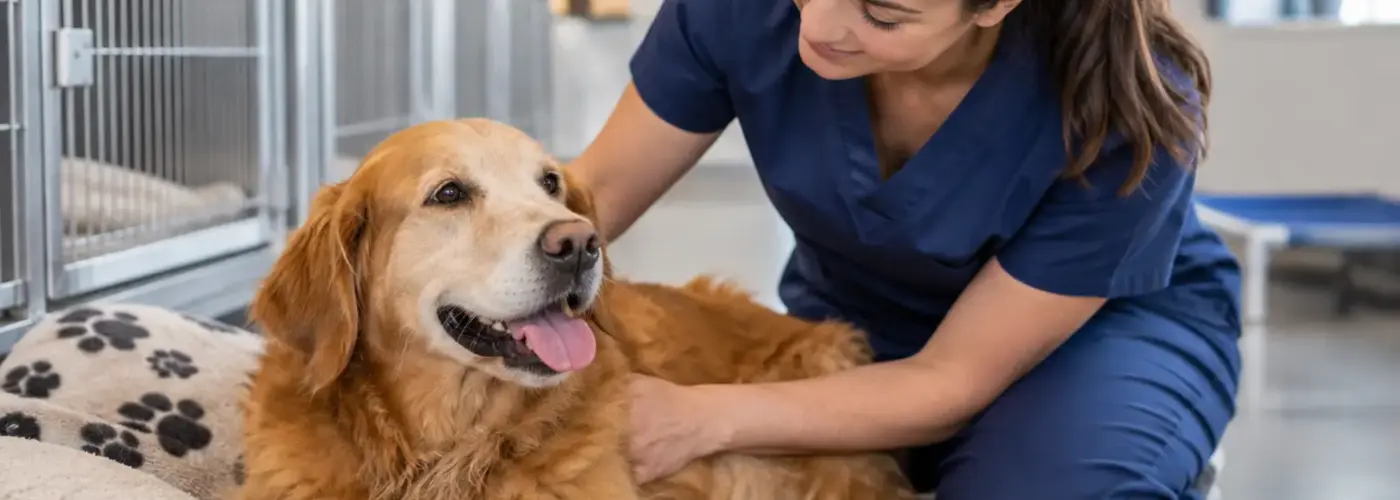
What Overnight Kennel Staffing Means for Pets

Leaving a dog or cat in boarding is a matter of trust, especially once the day has quietened down and the lights are lowered. Overnight kennel staffing is one of the most worthwhile subjects to ask about before booking, because it helps owners understand how a boarding home manages reassurance, routines and unexpected situations after normal daytime hours.
A good answer is rarely a simple yes or no. Different boarding establishments use different arrangements, and the right level of cover depends on the animals staying, the layout of the premises, licensing requirements and the systems already in place. What matters is that night-time care has been considered properly, communicated clearly and supported by sensible welfare procedures.
Why night-time arrangements matter
Dogs and cats settle in different ways when they are away from home. Some are content after a busy day, a familiar meal routine and a comfortable bed. Others may take longer to relax, particularly on their first stay, after a change in household circumstances or if they are naturally nervous.
The quiet hours can be when an unfamiliar sound, a change in weather or separation from home feels most noticeable. A well-run boarding environment does not assume every animal will react in the same way. It plans for calm, secure accommodation and a sensible response if a pet needs attention.
For dogs, the quality of the daytime routine has a great deal to do with how well they settle at night. Dogs that have had appropriate exercise, opportunities to sniff and explore, time in their individual run and positive contact with carers are often more ready to rest. Heated sleeping areas, dry bedding and a peaceful kennel block also make a real difference in colder months.
Cats need a slightly different sort of reassurance. They often value consistency, a clean and warm suite, quiet handling and the chance to withdraw to their own safe space. A cattery should feel secure rather than busy, with accommodation designed to avoid unnecessary stress from unfamiliar sights and sounds.
What overnight kennel staffing can mean
The phrase can describe several arrangements, so it is always worth asking what it means at a particular boarding business. Some establishments have an awake member of staff on site throughout the night. Others have a resident team member who can respond quickly, while some operate with planned evening and early-morning checks alongside clear emergency arrangements.
None of these descriptions alone tells the full story. An awake overnight presence may be particularly reassuring for owners of a pet with a known concern, but it should still sit alongside clean accommodation, secure boundaries, knowledgeable daytime care and a reliable veterinary plan. Equally, a premises without a person actively walking the kennel block all night may still have thoughtful procedures for settling animals, monitoring them at handover and responding to emergencies.
The useful question is not simply, “Is someone there overnight?” It is, “How are the animals kept safe and comfortable overnight, and what happens if something changes?” A professional boarding provider should be happy to explain its approach in plain language.
The difference between checks and constant disturbance
More supervision is not automatically better if it prevents animals from resting. Dogs and cats need uninterrupted sleep, and a bright, noisy kennel block with frequent unnecessary activity can be unsettling. Good care is about balance: enough observation to identify a concern, while preserving a quiet environment where animals can switch off.
This is why evening routines matter. Before settling down, staff should have enough time to make sure each animal is comfortable, has had access to water, appears well and is secure in its accommodation. Any individual instructions, from a slower eater to a dog that benefits from an extra toilet break, should be handed over clearly.
Questions that give owners a clearer picture
A viewing or booking conversation is the right time to ask practical questions. You do not need specialist knowledge to judge whether answers sound specific and reassuring.
Ask how the evening routine is managed, whether staff live on site or are available to attend, and how emergency calls are handled. If your pet takes medication, has a health condition or has shown anxiety when left before, explain this honestly. The team can then tell you whether the stay is suitable and what extra arrangements may be possible.
It is also sensible to ask about veterinary support. A boarding provider should have a clear process for contacting a vet if a pet becomes unwell or has an accident. Twenty-four-hour veterinary standby support is valuable, but owners should understand how it works in practice: who assesses the situation, how the vet is contacted and how the owner is kept informed.
For first-time boarders, ask whether a short trial stay could help. One night before a longer holiday is not right for every pet, but it can be helpful for some dogs and cats, as well as their owners. It allows everyone to learn more about how the animal settles away from home.
The details that support a peaceful night
Overnight care begins long before bedtime. The standard of the accommodation, the cleanliness of the site and the confidence of the staff all shape an animal's experience.
Secure individual spaces are particularly important. Dogs need accommodation that keeps them safely separated while allowing them to rest without the pressure of close contact with unfamiliar dogs. Covered outdoor runs give staff a practical way to manage fresh air and toileting without compromising safety or comfort in poor weather.
Temperature control matters too. Heated accommodation is not a luxury when the weather turns cold; it is part of helping animals remain comfortable and settled. In warmer conditions, ventilation, shade and fresh water become equally important. A responsible provider adjusts routines to the season rather than treating every night in the same way.
Enrichment deserves a place in the conversation as well. Indoor toys, gentle interaction and suitable exercise can help reduce boredom during a stay. They are not a substitute for attentive care, but they support a fuller routine that makes rest easier afterwards. For dogs, twice-daily walks in a secure paddock can offer a welcome outlet for energy and curiosity before returning to their kennel.
When a pet may need extra consideration
Young dogs, elderly pets and animals with a medical history can need a more detailed discussion before boarding. So can pets that are fearful of storms, reactive to noise, recovering from illness or unused to sleeping away from their family.
The answer is not always extra overnight staffing. Sometimes a quieter position in the kennel block, a familiar blanket from home, an adjusted feeding routine or a shorter stay is more useful. In other cases, boarding may not be the best fit at that particular time. A caring provider will be honest about this, rather than making a promise that does not serve the animal's welfare.
Owners can help by sharing accurate information. Mention previous boarding experiences, behaviour around other animals, medication, dietary needs and anything that usually helps your pet settle. A familiar-smelling item may be appropriate, provided it is safe and clearly labelled. Avoid making a sudden change to food immediately before a stay, as keeping routines familiar can reduce unnecessary tummy upsets.
Reassurance comes from clear standards
The best overnight arrangements are part of a wider culture of care. They should sit behind secure accommodation, thoughtful exercise, good record-keeping, trained staff and a clear emergency plan. A peaceful night is more likely when the whole day has been organised around the animal's needs.
For owners around Coulsdon, Purley and Croydon, visiting a boarding setting can make this easier to judge. Look beyond a single promise about staffing and notice whether the surroundings feel orderly, clean and calm. Ask how staff get to know individual pets, how routines are recorded and how concerns are shared with owners.
At Windmill Farm, the aim is to offer dogs and cats the comfort, attention and space that make time away from home feel more like a well-managed holiday than temporary containment. The farm setting, heated accommodation, individual runs, paddock walks and enrichment all contribute to that sense of care, while veterinary standby support provides an important safeguard if urgent advice is needed.
Before your next trip, give night-time arrangements the same attention you would give exercise, feeding and accommodation. A straightforward conversation about how your pet will settle, be monitored and supported after dark can replace uncertainty with the quiet confidence that they are in capable hands.
Posted: 11th October 2026
Why Choose Windmill Farm?
Here at Windmill Farm we understand how much your pets mean to you and so we want you to be confident that choosing us to house your pets is the best decision. Your stay at Windmill Farm will benefit from...
- Very friendly, family run business
- Established for over 60 years
- Surrounded by 15 acres of land
- Nestled in the Surrey countryside
- Dog pick up and collection service
- 24 hour on-call veterinary services
- Covered outside runs and plenty of toys
- All kennels and catteries are fully heated