Can Cats Board Together Safely? What to Know
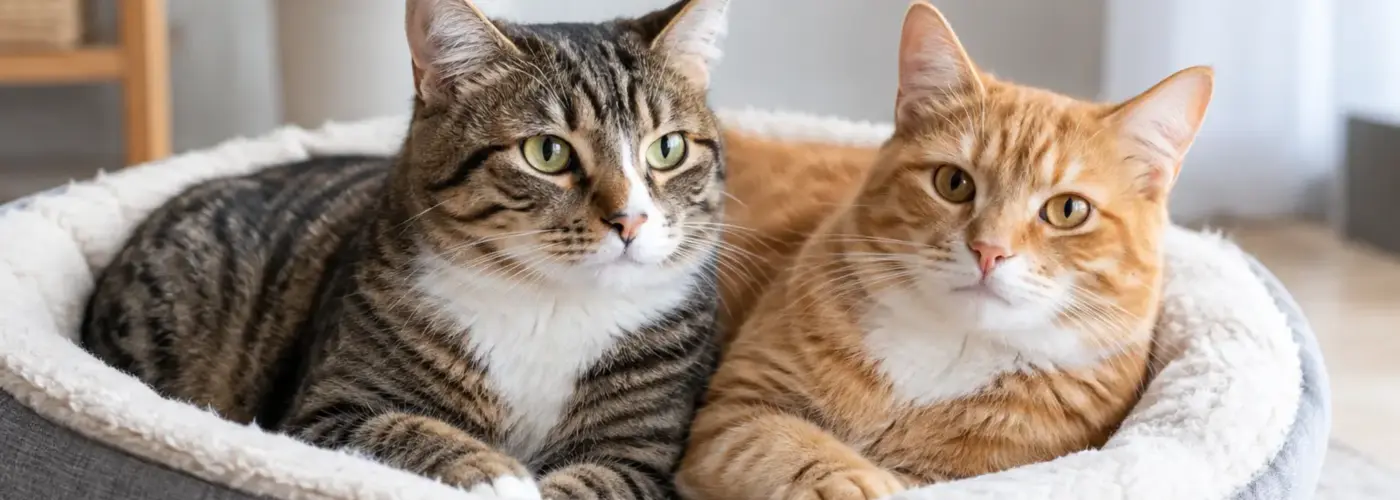
A pair of cats may sleep curled together on the sofa at home, yet react very differently when their familiar surroundings disappear. So, can cats board together safely? Usually, yes - when they already live peacefully together and the cattery can give them the space, routine and individual attention they need. But sharing accommodation is not automatically the kindest option for every pair.
For owners heading away on holiday, the question is rarely just about convenience. It is about whether each cat will feel secure, eat normally and come home as relaxed as possible. A good boarding decision starts with the relationship your cats have with one another, not simply the fact that they share an address.
When cats can board together safely
Cats from the same household often settle better when they remain with a familiar companion. This is particularly true of a close-bonded pair that regularly sleeps together, grooms one another, plays without conflict and seeks each other out when resting. The familiar scent, voice and presence of the other cat can make a new cattery suite feel less strange.
Keeping bonded cats together can also help preserve their usual routine. They can rest at the same time, enjoy enrichment together and return home without needing to re-establish their relationship after a separation. For siblings who have never lived apart, or an older cat and its long-standing companion, this continuity can be reassuring.
That said, a peaceful-looking household does not always mean a truly bonded pair. Many cats coexist rather than actively enjoy sharing close quarters. At home, they may have several rooms, favourite sleeping places and the freedom to move away from one another. In a boarding suite, even a comfortable one, that choice is more limited. The difference matters.
Look at their relationship, not their labels
“Brother and sister”, “littermates” and “they have lived together for years” are useful background, but they are not guarantees. Watch what your cats actually do day to day.
Close companions tend to choose to be near each other. They may rub faces, settle in the same bed, groom one another, play gently and appear calm when sharing food areas or attention. A little chasing or the occasional warning hiss can be normal, especially in multi-cat homes, but persistent tension deserves more caution.
Cats may be better boarded separately if one routinely blocks the other from food, litter trays, beds or doorways. The same applies if one cat hides after confrontations, if fights become physical, or if one becomes unsettled whenever the other is nearby. Boarding can be stimulating even for confident cats, and stress may make a minor home disagreement more pronounced.
Age and health can change the picture too. A lively young cat can overwhelm a quieter senior companion, while a cat recovering from illness may need uninterrupted rest and close observation. Separate accommodation does not mean either cat has failed. It can simply be the calmer, safer arrangement.
Never board unfamiliar cats in the same suite
Cats that do not already live together should not be placed in shared boarding accommodation simply to reduce costs or keep each other company. Unlike some dogs, most adult cats do not welcome a quick introduction in an unfamiliar environment. A new cat, new smells and reduced personal territory can create considerable stress.
Professional catteries should keep cats from different households separate. This protects their welfare and helps manage hygiene and disease-control standards as well as behaviour. Companionship is valuable when it is already established. It should not be forced during a stay away from home.
What makes shared cattery accommodation safe?
A suitable suite needs enough room for both cats to make choices. They should be able to rest apart, eat without being crowded and use facilities without one cat guarding access. Ask the cattery how it plans to arrange bedding, feeding bowls, water and litter provision for two cats. The answer should reflect the needs of the individual pair, rather than a one-size-fits-all arrangement.
Privacy is just as useful as space. Even the closest cats can appreciate separate raised beds, covered sleeping spots or a quiet corner. Cats often feel safer when they can observe without being on show, particularly during the first day or two of a stay.
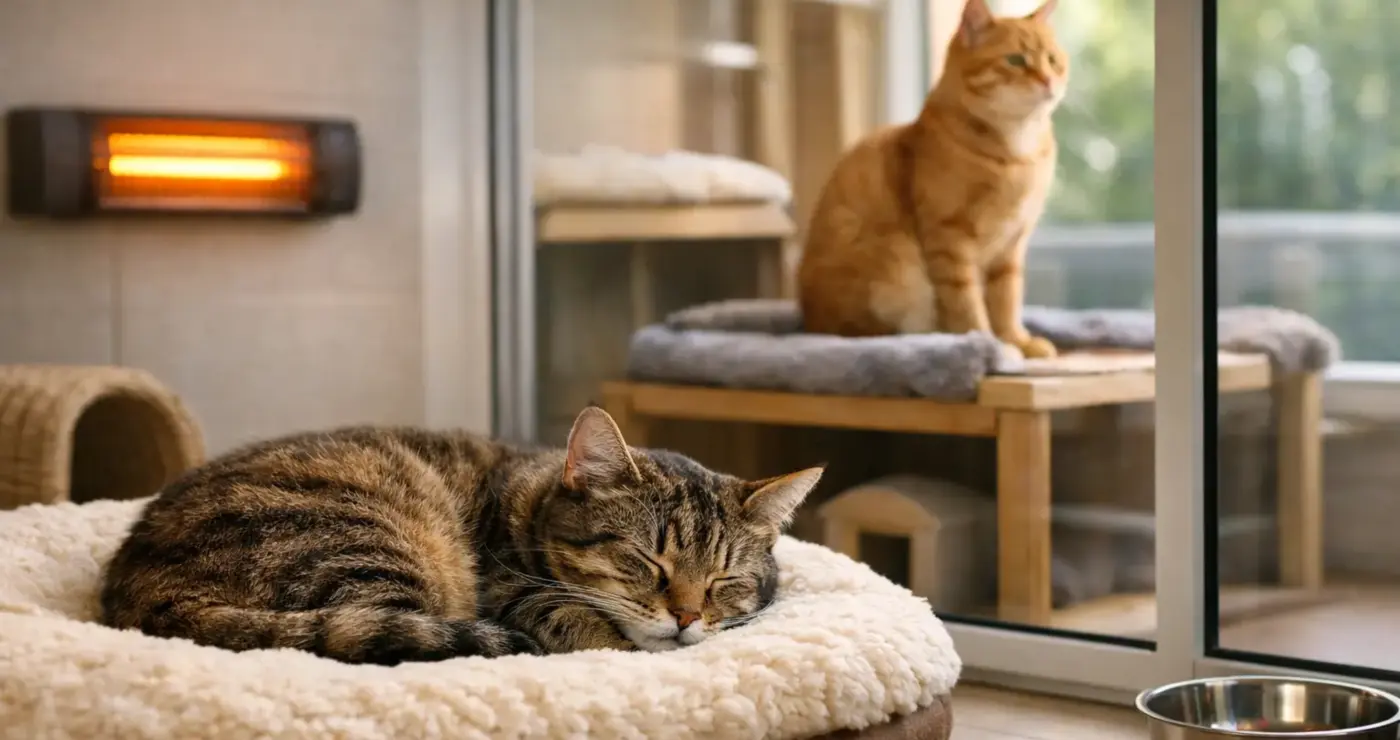
Cleanliness, ventilation and a comfortable temperature matter for every boarder, but they are especially valuable in a shared suite where both cats need to settle. A well-managed cattery should also have clear procedures for monitoring appetite, toileting, behaviour and general wellbeing. A cat that is eating less or hiding more than usual may need extra reassurance - or, occasionally, a change in arrangements.
At Windmill Farm, the focus is on giving cats a comfortable, supervised stay with attentive care, heated accommodation, indoor enrichment and veterinary support on standby. Before booking, it is still worth discussing your cats’ personalities honestly. The best plan for a confident, affectionate pair may differ from the best plan for two cats who simply tolerate one another.
Feeding separately prevents avoidable stress
Food is one of the clearest places where a shared stay can reveal tension. At home, owners may not notice one cat finishing the other’s supper or quietly waiting until the room is empty before eating. In boarding, staff need to know exactly who has eaten, how much and whether either cat is off their food.
For this reason, even cats sharing a suite should normally be fed in separate bowls with enough distance between them. Cats on prescription diets, special feeding schedules or medication need an especially clear plan. Tell the cattery what each cat eats, how it is served and whether either cat is likely to steal food.
The same principle applies to litter facilities. Cats are naturally particular about toileting, and an anxious cat may avoid a tray it feels another cat is controlling. Providing appropriate, regularly cleaned facilities and monitoring their use helps staff spot changes early.
Prepare your cats before their stay
A calm arrival begins at home. Keep your cats’ routine steady in the days before boarding, and use their normal carrier rather than introducing an unfamiliar one at the last minute. If they are used to travelling separately in carriers, continue with that approach for safety, even when they will be sharing a suite on arrival.
Give the cattery an accurate picture of both cats. Mention their usual sleeping habits, favourite toys, feeding routine, medical needs and anything that worries them. It is also helpful to say who is the bolder cat, who tends to hide and whether either cat becomes vocal or withdrawn when routines change.
Bring the required vaccination information and follow the cattery’s admission guidance. This protects your own cats and the other animals in their care. If one cat has recently been unwell, has fleas, or is showing a change in appetite or toileting, speak to the team before the stay rather than hoping it will settle once you are away.
A familiar-smelling blanket or bedding can be comforting where the cattery permits it, although there is no need to fill the suite with belongings. One or two familiar items are usually enough. Staff should be able to keep the space clean, safe and pleasant for both cats.
Ask what happens if the pair stop settling
Even a well-matched pair can have an off day. The most reassuring cattery is one with a sensible contingency plan. Ask what staff will do if one cat begins guarding food, repeatedly hiding, becoming distressed or showing aggression towards the other.
Sometimes additional observation, adjusted feeding arrangements and quiet reassurance are all that is needed. In other cases, temporary or full separation may be kinder, provided suitable individual accommodation is available. This is not a sign that the boarding has gone wrong. It is an example of staff putting the cats’ comfort ahead of an original plan.
It is also wise to ask how owners are contacted if there is a welfare concern and what veterinary arrangements are in place. Clear answers allow you to travel with greater confidence, knowing that any change in behaviour will be taken seriously.
Choosing the kindest arrangement
For an affectionate, settled pair, boarding together can provide welcome familiarity and make their time away from home feel less unsettling. For cats with a fragile relationship, different energy levels or signs of resource guarding, separate suites may offer more peace. The right choice is not the one that sounds most convenient. It is the one that gives both cats the best chance to eat, rest and feel secure.
When you talk through your cats’ habits with an experienced boarding team before you book, you can make that decision with their comfort at the centre - and leave knowing their individual needs will be noticed.
Why Choose Windmill Farm?
Here at Windmill Farm we understand how much your pets mean to you and so we want you to be confident that choosing us to house your pets is the best decision. Your stay at Windmill Farm will benefit from...
- Very friendly, family run business
- Established for over 60 years
- Surrounded by 15 acres of land
- Nestled in the Surrey countryside
- Dog pick up and collection service
- 24 hour on-call veterinary services
- Covered outside runs and plenty of toys
- All kennels and catteries are fully heated